Courage is not the absence of fear,
Recipient Ryan Pitts, Army, Global War on Terrorism
it’s the ability to move forward in the face of it.
The Medal of Honor is an award given to members of our armed forces in the United States by the President. It’s given to those who distinguish themselves by “gallantry and intrepidity at the risk of his or her life above and beyond the call of duty.” It is the most prestigious award in the land, given to less than 4,000 people since the Civil War. Today we only have 61 living Medal of Honor Recipients.
This weekend is Memorial Day and the unofficial start to summer. But it’s also an important holiday here in the U.S. that remembers those who made the ultimate sacrifice for their country. In honor of this holiday, I thought it would be a good time to share about our recent visit to the Medal of Honor Museum in Arlington, Texas.
The Museum opened just a couple months ago at the end of March to honor “the inspiring lives and legacies of the ordinary Americans who took extraordinary action in the service of others.” The building itself is an extraordinary piece of architecture located close to the baseball field where the Texas Rangers play. With the entirety of the square building resting on five massive columns, it symbolizes all of America supported by the five branches of our military, the Army, Navy, Air Force, Marine Corps and Coast Guard. As you enter the rotunda with these columns, you are surrounded by the names of all Medal of Honor recipients in a never ending ring of light.
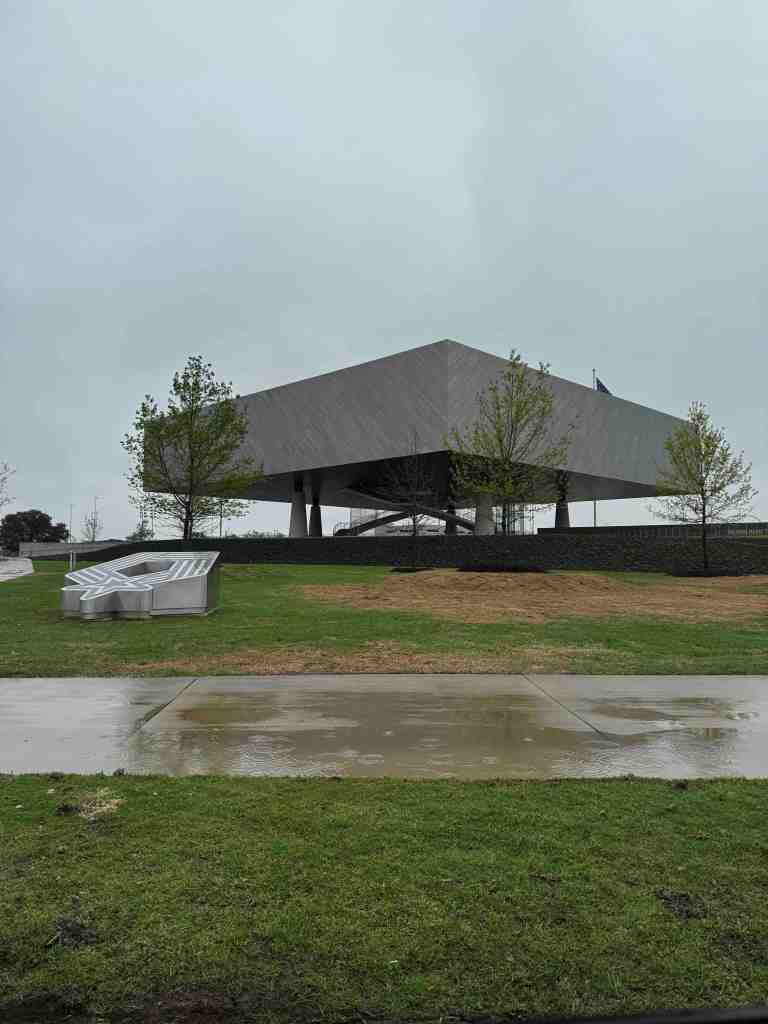
After you get your tickets you’ll be asked if you want to take the stairs or the elevators up to the main level of the museum. Docents suggest you take the long and curving staircase that represents just a tiny fraction of the strength needed by the MoH Recipients. They recommend taking a moment of reflection as you climb the stairs to think about that was sacrificed for our freedom.

Upon reaching the apex of the stairs, we were led into a cavernous room with 360 degrees of video screens. An introduction video like no other greeted us. I didn’t anticipate crying so early into my visit but there I was, tears streaming down my face. I don’t remember most of what was said in that video but I do remember one thing. One recipient said “it was worth it, for you,” meaning all he went through was worth it for the American people. How blessed we are to have such amazing men and women in our nation.
Following the video we learned about the initial concept, requirements and design for the medal. Followed by displays of all the very true stories of bravery and sacrifice. On display are letters to home, uniforms, flags, and other memorabilia of times of war. Many of the displays discuss two different men with two different stories, but they have a common thread, such at two men who went on to become movie stars when they returned home. That one was an easy tie, said the docent, but try to figure out the others, they aren’t all so obvious. When you visit, see if you can figure them out for yourself.
Here are some of the stories that resonated most with me.
Major Charles W. Whittlesey

photo courtesy of cmohs.org
Commander of the now famous “Lost Battalion” during WWI, Maj. Whittlesey did everything he could to ensure as many of his men as possible were able to make it out of the Argonne forest without surrendering to the German troops who surrounded them.
After his return home, however, he suffered with what was then called shell-shock and what we know today as PTSD (post-traumatic stress disorder). Consistent media about the war and even a movie made about the Lost Battalion made it impossible for him to move on. In 1921, he was requested to participate in the intonation of the Tomb of the Unknown Soldier in Washington DC. It’s said that he couldn’t shake the feeling that the man in the Tomb was one of his from the Argonne Forest. Two weeks later, he walked off the deck of a ship bound for Havana, Cuba, never to be seen again.
Read a detailed story of Maj. Whittlesey here.
Tibor “Ted” Rubin
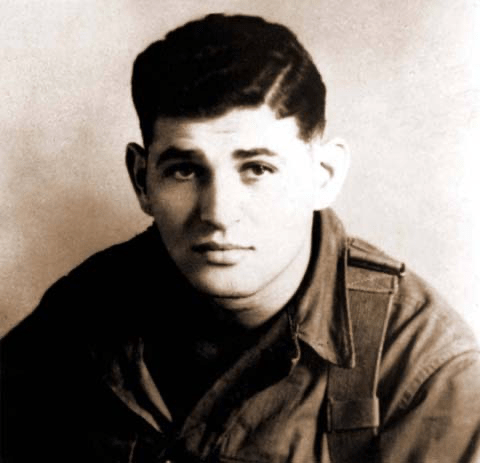
A Hungarian holocaust survivor, Tibor Rubin immigrated to the United States in 1948. By 1950 he had joined the United States Army and went to fight in the Korean War. It was in Korea where he was captured by Chinese soldiers and sent to a prisoner of war camp. Upon arrival Chinese soldiers offered to free Rubin and return him to his home country of Hungary, but he volunteered to stay with his fellow prisoners. During his time at the camp, though severely injured, he risked his life to sneak out to scour the surrounding areas for food and much needed medical supplies for his fellow prisoners. In this time of crisis he leaned on his Jewish faith to help those around him. He was held captive for 30 months. It’s said that his actions during this time saved as many as 40 other men.
When he returned to the U.S. his letter to his brother read as follows: Dear brother, arrived safely. Am in good Army hospital. Never so happy to be an American as today.”
Unfortunately, one of his leaders in the Army was an anti-Semite and even though many soldiers wrote to attest to his heroism, he received no awards or recognition when he returned home.
It wasn’t until 2005 after a years long investigation into religious discrimination in soldiers, was Tibor Rubin given the Medal of Honor by President George W. Bush.
After the war he lived his remaining years in Garden Grove, California and spent many hours volunteering at the VA hospital in Long Beach. The hospital which now bears his name thanks to a proclamation made by President Barack Obama in 2017, two years after is death in 2015.
Read a detailed story about Cpl. Tibor Rubin here.
These are just two of the stories that make you realize how these ordinary men did such extraordinary things in the face of extreme danger to save the lives of those around them.
If you’re in the Dallas area, I highly recommend visiting the museum. Filled with amazing stories of heroism, it will make you proud to be an American. And if you’re just visiting, I hope you see a little more the amazing people from the United States who fight for freedom all over the world.
The Medal of Honor, By the Numbers
4,000,000 + – The number of people who have served in the United States Armed Forces
<4,000 – The number of men who have received the Congressional Medal of Honor
1863 – The year that the first Medal of Honor was given.
14 – People who have received the Medal of Honor twice, for two separate acts of bravery.
3 – The number of current Medal of Honor designs (One for the U.S. Navy, one for the U.S. Army and one of the U.S. Air Force – the US Marine Corps receives the U.S. Navy design and the Space Force receives the Air Force design).
 Fernweh Findings
A beautiful experience Samantha and a great thoughtful and very informative article. Dianna
Sent from the all new AOL app for iOS
LikeLike